Air Press

Pressotherapy is the most important technique for limb health; it can be performed daily and has no particular contraindications, aside from acute phlebitis, advanced pregnancy, and varicose veins resulting from phlebo-thrombosis.


AirPress

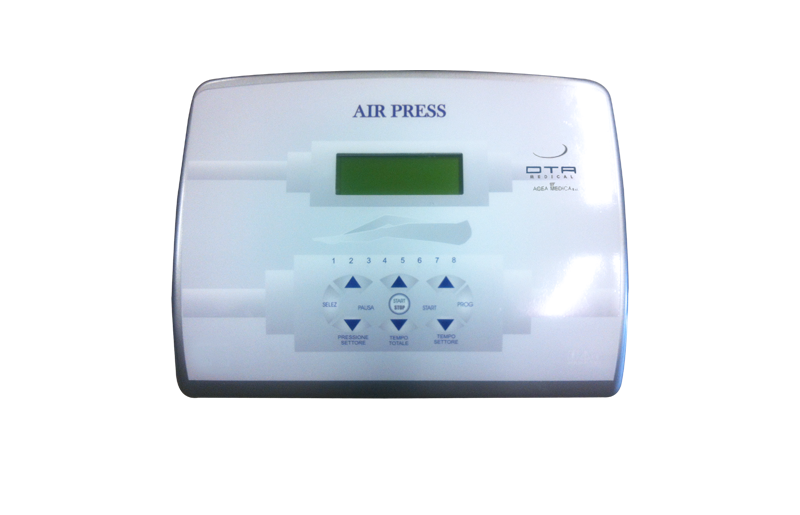
The programs are of great importance: four in total (plus a CUSTOM mode for clients with special needs), stored in the device's memory.

 Pressotherapy is the most important technique for limb health; it can be performed daily and has no particular contraindications, aside from acute phlebitis, advanced pregnancy, and varicose veins resulting from phlebo-thrombosis. Recent clinical studies have unequivocally shown that pressotherapy provides such significant benefits that it can no longer be considered a secondary aid, but rather an indispensable method for correcting the effects of veno-lymphatic insufficiency.

...

  • Programming content The built-in microprocessor reads from flash memory and loads 4 programs (modes), designed to make the device effective and easy to use for any operator, even inexperienced ones.

...

Accessories

Accessories for the AirPress Device

Air-Press Legs

...

Leg sleeves

Leg sleeves

Pressotherapy with physiological leg sleeves is rightly considered by all specialists an effective treatment for resolving and removing the pathological conditions resulting from venous and lymphatic stasis affecting the lower limbs of many women.
Given the close connection between stasis and cellulite, it is clear that addressing stasis is fundamental to obtain significant benefits as a result.

The leg sleeves used must therefore have the following requirements:

  • Optimal compression of the venous sole
  • Progressive compression with slow ascent (peristaltic, constant and draining mode)
  • Perfect contact with the entire limb
  • Graduated compression toward the outer areas, similar to manual massage
  • Strong compression only in swollen areas
  • Reduced compression times
  • Perfect interstitial drainage
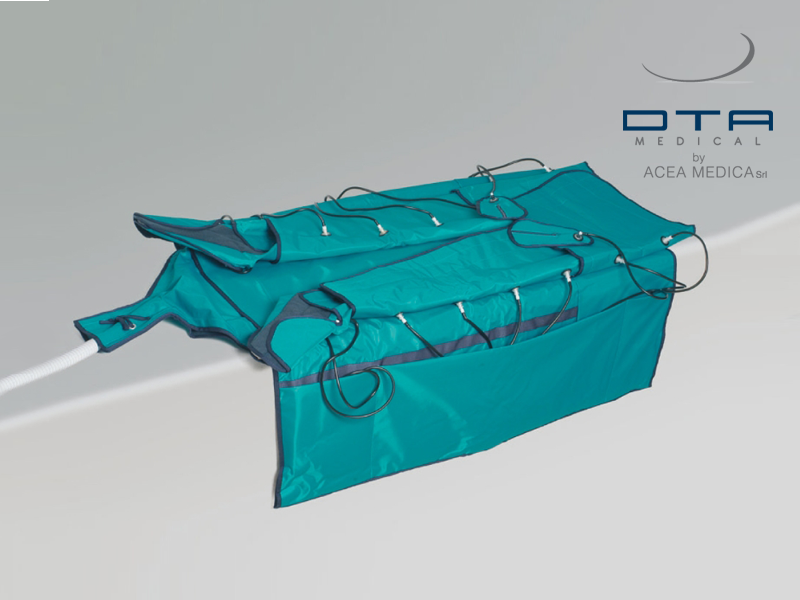
Sectored leg sleeve

The sectored leg sleeve is the most physiological pressotherapy sleeve, as it ensures continuous, dynamic and progressive compression, always maintaining perfect contact with the limb in any situation. The resulting effect is similar to draining the limb with two pairs of enormous hands: when the first pair reaches maximum compression, the second begins compressing. When the second reaches its maximum, the first eases and moves above the second, starting to compress again, and so on up to the groin. As a rule, draining compression always starts from the lower end. For legs, the venous sole is compressed first, then the ankles, and so on.
As is well known, venous and lymphatic circulation has no main pump to move fluids, but instead relies on a series of indirect mechanisms. These include compression of the venous sole, special swallow-tail valves, compression derived from muscle expansion, and so on.
When these mechanisms are impaired, tissue drainage slows down and the first edemas and lymphedemas begin to form, which, if they become chronic, lead to the damage we see every day on the legs of millions of women.
Full leg sleeve
In which total, simultaneous compression is applied to the entire limb. This is not compatible with veno-lymphatic outflow, which always starts from the extremity.
 
Sectoral bands


Programs

Peristaltic program
The first program is called peristaltic. This treatment has produced the strongest results in research on venous blood flow speed following compression, at equal massage tolerance. This effectiveness comes from the alternating compression-decompression phases, from foot to abdomen. Once comfortably fitted into the leg sleeves, the patient undergoes this instrumental massage, which applies pressure to the lower limbs and abdomen sufficient to clear slowed or stagnant veno-lymphatic circulation, promoting venous return of fluids into the large veins of the abdomen and chest, which subsequently feed the renal filtration process. At the end of this process, all the removed fluids are eliminated through urine.
 
Elephantiasis program
The second is called elephantiasis. This treatment starts from the most distal areas and compresses the entire lower limbs, up to the abdomen; it is highly indicated for venous insufficiency issues. It is the fastest program (in sequence) but also the most demanding to tolerate, which is why it mandatorily requires a rest pause, so as not to interfere too continuously with arterial pressure, which acts in the opposite direction.
 
Arterial program
The third program is called arterial. Of a descending type, it is very useful for arterial issues and is therefore indicated for arterial disease; in general it supports the pumping action of the arterial vessels, promoting distal blood supply to the lower limbs.
 
 
Draining program


...